
https://www.u-s-history.com/pages/h3857.html
A Brief Biography of Nathaniel Hawthorne
Nathaniel Hawthorne was an American author who was born 1804 in Salem, Massachusetts. He died May 19, 1864. During his life, Hawthorne grew up without a father, as he had died of yellow fever, so Nathaniel, his mother, and his two sisters went to live with Hawthorne’s Grandparents on his mothers side. Because of his grandfathers business, his family was able to be taken care of a live quite lavishly. It was at age 9 though that Hawthorne had an accident that left him incapacitated for 14 months, and during that time is when he was pulled into the world of literature through the books his family owned. another part of his childhood was a a plot of land in Raymond Maine, owned by his Grandparents family, where their was a lakeside and forest where he could swim, play and hunt. Sadly, as he grew, he was called back to Salem to prepare for college. During his life at Bowdoin College in Brunswick Maine, he was slightly negligent of his studies preferring to do his own thing rather than study for his classes. At the college he also met his three lifelong friends, Horatio Bridge, Henry Wadsworth Longfellow, and future president, Franklin Pierce. After graduating, he settled in to start what he referred to as “12 lonely years”. It was at this time that his writing began, and he remained relatively unknown. During this time though, he was not fully isolated as he still do attend dances and card games, and he took long walks around and beyond Salem. He even traveled, going as far as Niagara Falls once. He also kept reading, recording down characteristics and other things as he took notes. One of the main things which would influence his writing was his fascination with New England’s Puritan past. it was in 1828 though, that Hawthorne made his first attempt at fame, publishing with what little money he had, Fanshawe. Though it received some mild praise, Hawthorne was not satisfied. he tried to publish three more stories, but he ended up burning the first, and more sensibly publishing the other two separate, actually having some success on them. He also agreed to edit the American Magazine of Useful and Entertaining knowledge, mainly because he needed the money. He also published his first children’s book, making $100 off of it. At this time he had labeled himself as “the obscurest man of letters in America”. This ended in 1837 when his collection of stories was published under his real name, called Twice Told Tales. With this, readers who had enjoyed work by him that was previously published under a pen name could now look forward and widen readership of his work. He also sent a copy to his friend, who was now a famous poet, Henry Wadsworth Longfellow, who helped now make his name marketable. This also helped introduce him to his future wife, Sophia Peabody. In order to gain more money, he started his first political job, working at a custom house, eventually leaving and investing in Brook Farm, a utopian idealist community, but later left because the work made him much too tired to write. After he eventually left, he published some more of his work, before marrying Sophia on the 9th of July, 1842. Though he was happy, he had financial trouble, and even though he published quite a bit at the time, he eventually had a child which forced him and his wife to move in with Hawthorne’s family for a short time. This led him to eventually having to get a Job with the custom house again to ease financial trouble. Though it did ease the finances, he found that this job stifled the imagination. He was fired 3 years later due to a change in the political party, and a month later his mother died. At this time, Hawthorne began work on his most famous novel, The Scarlet Letter. He left Salem in 1850, never returning, and moving to Lenox Massachusetts. He also continued work there, eventually publishing his third edition of Twice Told Tales. He continued writing, but moved and bought a house in Concord, a place he would be for less than a year as at the same time, his friend Franklin Pierce was nominated president, and Hawthorne was asked to write the campaign biography, a project delayed by the grief over his sisters death. The reward was a four year position as the Consul to Liverpool. He did many things during this time, but his imagination was stifled. By the end of this job, he had saved money so that his family could take an extended trip and travel to Italy, to fulfill his wife’s dream, further his children’s education, and refining his taste. Returning from the trip, Hawthorne went to work to complete his final novel, The Marble Faun. Eventually he returned to Concord in 1860, but while he tried to write more, he only managed to publish some of his sketches from a notebook and the beginning of another story. His final 6 months showed a serious deterioration in his health. He left for a trip with his friend Franklin Pierce in attempt to possibly restore his health, but he died in his sleep in Plymouth on May 19, 1864, and was buried in Sleepy Hollow Cemetery.
An analysis of Two Literary Techniques found in Hawthorne’s writing
1st Literary Device – Foreshadowing: ““Dearest Heart,” whispered she, softly and rather sadly, when her lips were close to his ear, “prithee put off your journey until sunrise and sleep in your own bed tonight. A lone woman is troubled with such dreams and such thoughts that she’s afeared of herself sometimes. Pray tarry with me this night, dear husband, of all nights in the year”” (Young Goodman Brown, Pg. 315).
Rationale for selection: This was chosen as foreshadowing due to later experiences that are thought to be all a bad dream, and Goodman Brown’s wife, Faith, has been affected by bad dreams as of late. Combining this with what is viewed as a bad dream foretelling of a dark omen, we see that his wife’s dreams may have been a warning. Something will happen because he went out and did not stay with his wife, and this changed him, because he himself had a dream. Her worry was quite real, thinking he was in danger because he was. He was in great danger because something was going to happen, and this something changed his view on his wife and his view on the town.
2nd Literary Device – Round or Dynamic Character: Young Goodman Brown
Rationale for selection: At the beginning he had believed in the purity of people, and had believed that he would stay true, and that his wife was a godly person who would not understand what he was doing or would be appalled. With this he does start to learn though, about the people of the town and what they do. Even if it was a dream, this experience of his deeply impacted him and he never was able to look at the towns people, nor even his wife, the same. These men he had seen were godly men, who warranted no ill repute, yet when he came to that place, he saw them. He saw friends, and many others. They had all fallen into sin, and they could not be helped, and he had heard his wife. His wife’s voice is actually the crux of the situation. If he had not heard his wife’s voice, and went to look for where she is, he may never had gotten to that place, and never would have changed so. He was also changed ever so slightly with the news of his father and grandfather, having participated in certain acts. With all this, Goodman Brown changed into someone who is distrustful, and slightly bitter and angry, someone who sees the world in a darker tone.
Review on a perspective of Hawthorne’s writing
Question 2, p. 347: Why is a “twilight atmosphere” more conducive to an appreciation of Hawthorne’s art than “sunshine”? This question is taken from the perspective writing On His Short Stories, page 347. This is taken from the Preface of the 1851 edition of Twice-Told Tales.
It is because Hawthorne is not meant to be cheery. He writes with human emotion and makes characters that are akin to those in real life, flawed people, people with regrets or hopes, but something that as was put “instead of passion there is sentiment” (On His Short Stories, Pg. 347). Sunlight is thought of as passion, burning and raging, but Hawthorne writes with a darker undertone, speaking of evil, and writing with a human sentiment at the world around him. Thus, we need to read in the twilight air, feeling the dark around us, but also a hint of light, and seeing the world around us as a shadow, a world where there is no warm embrace because we see the world as a place of not exuberant joy, but sadness, and heartbreak, but also with that little glimmer of hope that brings into the world some fresh air and light.
Overall Merit of Study
Nathaniel Hawthorne is worthy of study for several reasons, one being that he truly understands human nature. He shows us the truth about the world around us, the corruptness, and evil, the sadness, but he also shows that little bit of happiness in the world, even though it is usually lost. It is because he writes in such dark undertones, that he is able to reveal this truth to us, and because of this, we need to read his work, because reading and understanding it will give us a better knowledge of the world around us. Because he writes so well about human nature though, it is easy to connect with his work, and for me personally, I connected with The Ministers Black Veil. It spoke to me in a way, talking about how we all have a black veil, and we all have secrets to hide. I just found it very interesting about how at the end of his life, he would not have his veil removed, and stated that everyone had their own veil. I just found it very true, because of the concept that it is talking about.
It was actually the main characters I found engaging. They were the ones who would show the truth of human nature and reveal to us what people are like. It is extremely tragic, because in all circumstances there was always that dark undertone found in the writing, usually dealing with sin, and imperfection. Though it talks about all this, it still is engaging just due to the fact that these main characters are so much like people nowadays, and that they really did make me think about myself in a way I usually don’t. This led to thinking about how the writing did challenge my way of thinking, because naturally I don’t think in overtly cheerful tones, but this work reminded me more about the sin and evil in the world, the imperfection of life. Generally, my Christian Worldview is about believing and accepting so as to be received, but this just completely overturned my thinking reminding me that while we are forgiven, we still have sin, and we still hold it deep in our hearts, always having something we don’t want people to know about us. It also made me think about how people are just in that, because I don’t really like to socialize too much, I tend to avoid people at times, but I never usually think people as bad, but I Had to start thinking about my view on others reading this.
For more information
For more information on this author, watch these two videos below
Or visit the site that I got my information from:
http://www.anb.org/view/10.1093/anb/9780198606697.001.0001/anb-9780198606697-e-1600732
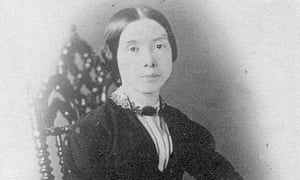
 Emily Dickinson, Poet